



GTA 6’s weather is no longer a subject that should be described only through sunny trailer frames. On November 16, The Weather Channel shared a Leonida forecast using new Rockstar screenshots. Reporting of that collaboration includes a statement from Rockstar’s Owen Shepherd explaining that the weather system was rebuilt to feel local, persistent, and dynamic. The images include rain, fog, mist, and storm conditions across different parts of the fictional state.
That is meaningful evidence of the range and intent of the weather presentation. It does not supply a complete simulation manual. Exact storm frequency, handling changes, mission effects, weather controls, and platform performance need more specific evidence. This guide explains what the newer material contributes, why the different conditions matter visually, and how to assess practical claims about weather without confusing atmosphere with a tested gameplay rule. It is a source-based analysis, not our own technical benchmark.
The Weather Channel collaboration changes the evidence
Push Square’s report reproduces the context of The Weather Channel’s post and Rockstar’s statement. The important point is not simply that the screenshots look dramatic. Rockstar supplied a weather-focused presentation and described the system’s design in terms of locality, persistence, and change.
That makes older blanket statements such as “Rockstar has said nothing about dynamic weather” inappropriate for an updated guide. The wording should change as the evidence changes. At the same time, a broad design statement does not answer every mechanical question. Localized weather can describe different conditions in different areas without revealing the exact size of weather zones. Persistence can describe continuity without supplying a timer. Dynamic behavior can describe changing conditions without promising a specific storm on demand. These terms have meaning, but their implementation still requires careful explanation.
The six forecast settings
Reporting on the forecast set identifies heavy rain in the Keys, a swamp storm around Pelican Valley, sea fog at South Ocean Beach, a tropical storm near the Rusty Anchor, mist over Gambit Bay, and rain and wind around Key Lento. The value of the set is its geographical variety: weather is presented as part of distinct places rather than one generic filter over the entire state.
Those labels should be read as the forecast presentation’s locations, not as a tested list of exclusive weather zones. A foggy South Ocean Beach image does not prove fog never occurs elsewhere. A storm near a bar does not prove the bar triggers the storm. For exploration, the names help connect the imagery with Leonida’s world. For predicting conditions, we would need actual observation or a more explicit explanation of the system’s rules.
Rain changes how the city reads
Rain gives roads and buildings a different visual emphasis. Wet surfaces can reflect signs, vehicle lights, and the sky, while rainfall reduces the crisp separation between distant objects. In a dense coastal city, those changes can make a familiar street feel newly layered. That is an analysis of the visual effect, not a measurement of the rendering technology used to create it.
For players, the first practical concern is readability. If you have trouble following an objective during a dark rain scene, check the game’s available display and accessibility options rather than assuming the weather is a bug. Adjustments should be made against a normal reference scene as well, because raising brightness for one storm can flatten daylight elsewhere. This article does not prescribe a universal brightness number: televisions, room lighting, and personal visibility needs differ. A useful settings guide should explain the calibration screen and the problem an adjustment is intended to solve.
Sea fog is different from a dark sky
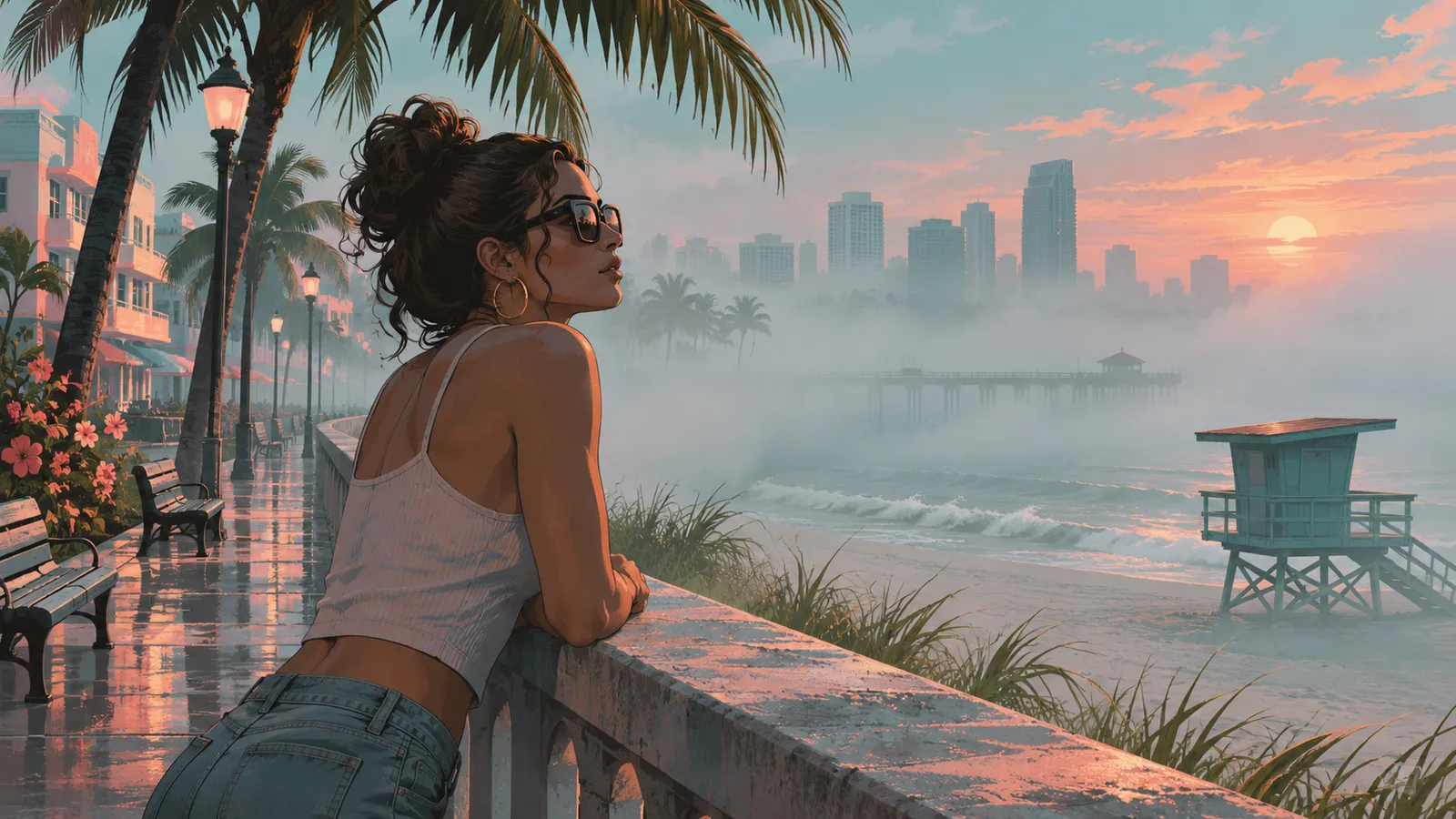
Fog changes depth perception by softening or concealing distant features. A dark cloud layer changes the sky and illumination, but it does not necessarily hide the same landmarks. Distinguishing the two helps explain why weather variety can affect the experience of a place even when the underlying map remains unchanged.
In a coastal scene, fog can make a skyline, bridge, or shoreline disappear gradually rather than simply making everything darker. That creates a different visual mood from a storm. It also changes what a screenshot can establish: a building hidden by fog is not evidence that the building is absent from that location. When comparing images to identify a place, use nearby fixed landmarks as well as the distant skyline. Weather can obscure the very features fans rely on when trying to match two views of the same area.
Mist and the wilderness setting
Low mist over water or vegetation gives wilderness scenes a different scale from open, brightly lit views. It can draw attention to the foreground and make distant trees or banks less distinct. In the forecast material, that presentation supports Leonida as a place with more than beaches and neon streets.
It does not prove a particular animal or fish appears only under those conditions. Our hunting and fishing guide explains the wildlife evidence separately. If a player reports a rare sighting during mist, record the conditions as useful context. Do not convert a single observation into a mandatory requirement. The difference matters for anyone trying to complete an activity: an untested weather condition can send readers waiting for hours when the real requirement is location, progression, or an interaction they have not yet discovered.
Tropical storms do not establish a disaster simulator
A tropical storm is part of the newer weather presentation, but the term should not be expanded automatically into a list of destructible buildings, evacuation systems, flooding mechanics, or guaranteed seasonal events. Those are specific features, each of which would need its own source or test.
The distinction is especially important because Leonida is inspired by a real region with dramatic weather. Real-world plausibility is not proof of a game mechanic. A designer can evoke a tropical storm through clouds, rain, wind, lighting, and sound without simulating every consequence a real storm would cause. When a headline promises hurricanes or destruction, look for the exact evidence behind the claim. This guide does not provide a verified hurricane schedule or a storm-damage system. It describes the weather-focused material that was actually reviewed and keeps broader possibilities separate.
Sunsets are lighting moments, not weather categories
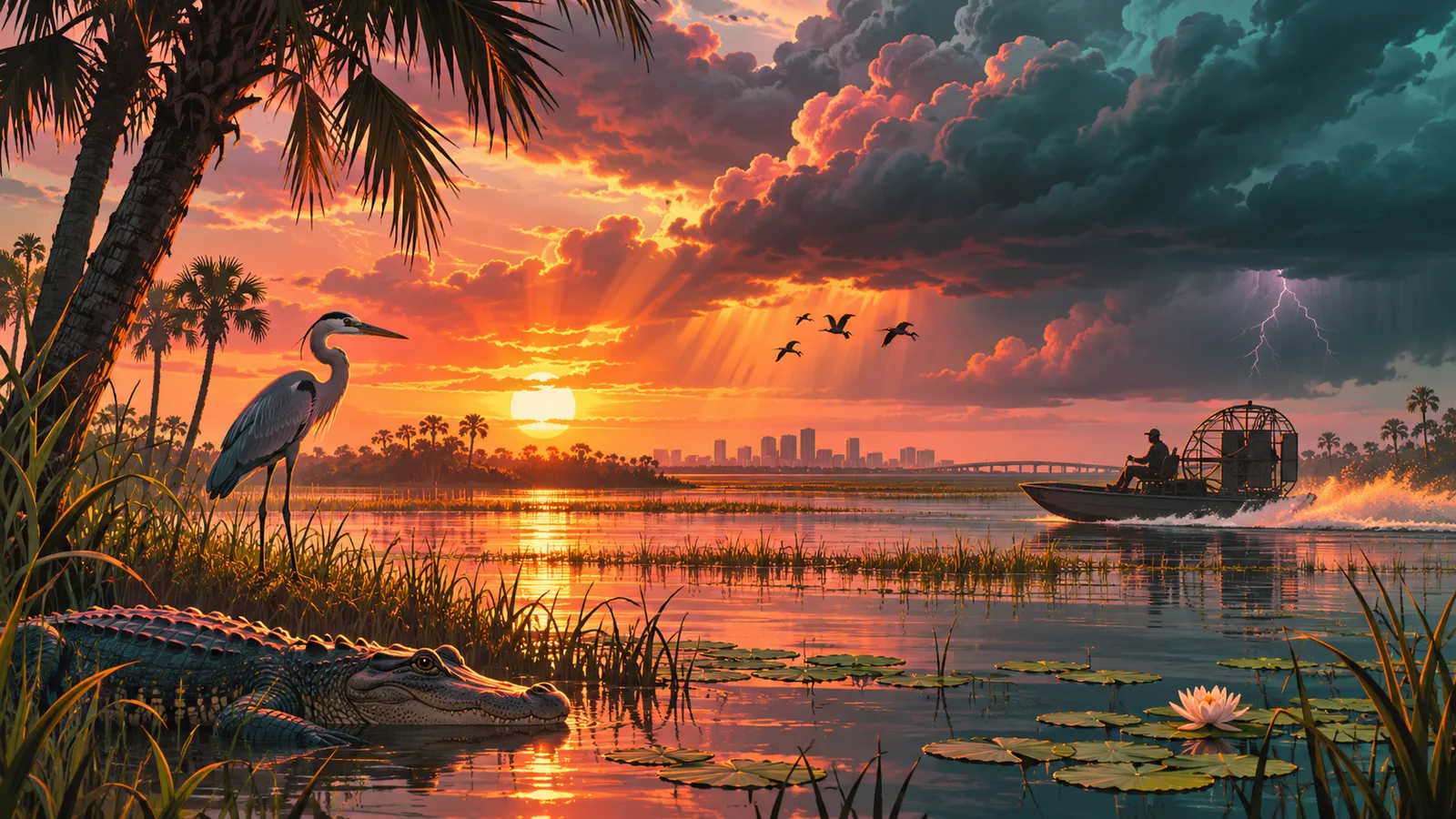
A sunset can coincide with clear skies, haze, clouds, or the edge of a storm. That is why two sunset images can feel very different even when their warm color is similar. The sun’s position and the cloud conditions work together visually, but they should not be treated as the same system when explaining the world.
For photography-minded players, the useful lesson is to pay attention to both direction and conditions. A skyline silhouetted against a bright sky offers a different composition from a street lit by low sun behind the camera. This is general visual guidance, not a claim about a verified GTA 6 photo-mode control. If you are recording the game with console capture tools, let a scene develop and compare the result as the light changes. A distinctive image often comes from a relationship between foreground, sky, and reflected light rather than from color alone.
Does rain change vehicle handling?
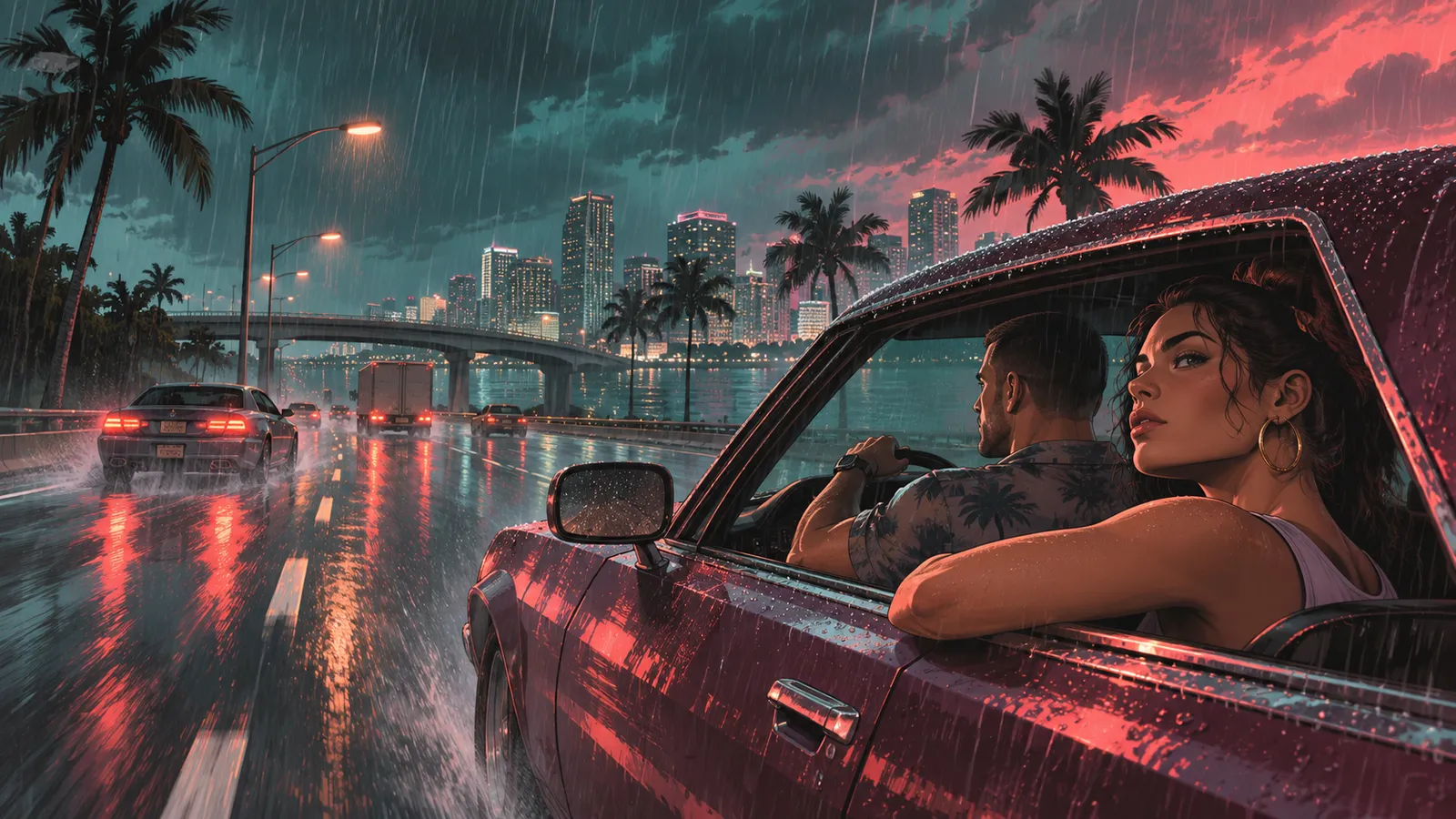
This research pass did not verify a measured wet-road handling model for GTA 6. A vehicle leaning on a wet road or a dramatic chase during rain does not quantify grip, braking distance, or steering response. Those questions require controlled comparisons, not impressions from edited promotional footage.
A useful test would compare the same vehicle, route, speed, tires or upgrades, and input conditions across different weather states. Even then, traffic and driver inconsistency can affect the result. For ordinary play, respond to the road you can see and the vehicle behavior you experience, but avoid treating a published percentage as reliable unless the author explains how it was measured. A guide can sensibly recommend cautious driving in poor visibility without claiming that Rockstar has implemented a particular friction coefficient or a fixed wet-weather braking penalty.
Does weather affect boats or flying?
Wind and rough-looking water naturally raise questions about marine and air travel. The weather images do not settle how waves, handling, visibility, or mission availability respond. A dramatic harbor screenshot can establish atmosphere while leaving the vehicle simulation almost entirely unexplained.
For a practical boat guide, the relevant evidence would show the same vessel responding under different conditions or an explicit explanation of weather restrictions. The yacht guide keeps ownership and control questions separate from appearance. The same discipline should apply to aircraft: cloud cover does not prove turbulence mechanics, and rain does not prove a takeoff restriction. If you encounter a travel limitation during a mission, check the actual objective text before assuming weather caused it. Story restrictions and environmental effects can look similar when the game does not explain the cause immediately.
Mission weather and open-world weather may differ
A story scene can use a particular time of day or weather state for dramatic reasons. That does not necessarily describe how the same location behaves during free exploration. Conversely, seeing different conditions in free roam does not prove a mission’s weather will vary on replay.
A good guide should identify the context of its observation. Was the player in a mission, replaying a mission, following a scripted introduction, or simply exploring? That context is often more useful than a screenshot alone. If a route guide relies on visibility of a distant landmark, it should offer a nearby reference as well. Weather and lighting may make the distant reference unreliable. This is a practical way to write navigation advice that remains helpful without claiming control over the game’s weather or assuming every reader will arrive under identical conditions.
Can players change the weather?
No verified weather-changing menu, cheat, or scheduling method is supplied in this article. A feature available in a previous Grand Theft Auto game should not be copied into GTA 6 instructions without checking the current game. The same applies to time-of-day controls, sleep behavior, and any photo-mode options.
If a guide claims to change weather, it should show the exact action and state whether it affects achievements, saves, missions, or only a temporary viewing mode. Those consequences matter to readers even when the action is reversible. If the method involves reloading, it should explain whether the outcome is consistent or simply rerolls conditions. Until a method has been checked, the honest answer is that this research pass did not establish one. That leaves room for future verified instructions without misleading readers into entering codes or following menus that may not exist.
Weather screenshots are not performance benchmarks
A beautiful image tells us little about sustained frame rate, resolution, input latency, or how every console handles a storm. Still images can hide temporal artifacts and cannot show frame pacing. Promotional video can demonstrate motion, but its upload format and editing still need to be considered before drawing technical conclusions.
For a useful performance comparison, look for the platform, game version, scene, capture method, and measurement technique. Do not assume that a storm is necessarily the most demanding scenario simply because it looks complex. Rendering cost can depend on many factors that a viewer cannot measure by eye. This guide discusses the appearance and reported intent of the weather system. It does not claim to have benchmarked GTA 6 on PS5, PS5 Pro, Xbox Series X, or Xbox Series S, and it does not infer a hardware ranking from the forecast screenshots.
Compare the same place under different skies
For a simple exploration exercise, return to one recognizable viewpoint in different conditions and compare what becomes visible. Keep the camera direction and nearby landmark consistent. You can learn how light, haze, and reflections change your reading of the scene without making unsupported claims about the engine. Record whether you were exploring freely or following a mission, because that context may affect the comparison. This approach produces useful personal observations and stronger screenshots while keeping the conclusion appropriately narrow: the place looks different under different conditions, and the images show exactly how.
Frequently asked questions about GTA 6 weather
Has dynamic weather been discussed publicly? Yes. The November Weather Channel collaboration and reporting of Rockstar’s statement provide a stronger basis than early trailer speculation. Are rain, fog, mist, and storms represented? They appear in the weather-focused coverage reviewed here. Does that prove specific driving or wildlife effects? No; those need separate evidence.
Are the forecast locations exclusive weather zones? The material does not establish exclusivity. Can I force a sunset or storm? This article provides no verified control method. Does a tropical storm prove widespread destruction? No such system is established here. The useful approach is to appreciate the variety while remaining precise about the rules. Leonida’s weather has a clearer public identity now; a complete player guide should add tested mechanics to that foundation rather than stretching a dramatic sky into a promise about everything beneath it.
Related guides
- Grassrivers in GTA 6: Leonida’s Wetlands and Wildlife
- Leonida Keys in GTA 6: Islands, Bridges and Jason’s Connection
- Ocean Beach in GTA 6: Vice City’s Beach and Art Deco Hotels
- GTA 6 Screenshot Tips: How to Take Great Photos in Leonida
- GTA 6 Map Guide: Six Confirmed Leonida Locations
- GTA 6 Beaches: Every Shoreline in Leonida