



GTA 6 and Red Dead Redemption 2 invite comparison because both place a crime story inside a richly presented open world. Their settings, central relationships, and kinds of movement create very different experiences, however. The most useful comparison is not a premature declaration that one is better at everything. It is an explanation of what each game asks you to pay attention to and which evidence supports the comparison.
This article compares official premises, published feature reporting, and the implications of a modern coastal setting versus a frontier story. It does not claim that we completed a controlled performance test or personally reviewed every system in GTA 6. Where the discussion moves from a stated feature to a design interpretation, it is presented as analysis. If you are deciding which game suits your interests, begin with setting and tone; if you are comparing technical performance, use platform-specific measurements rather than promotional screenshots.
The clearest difference is the historical setting
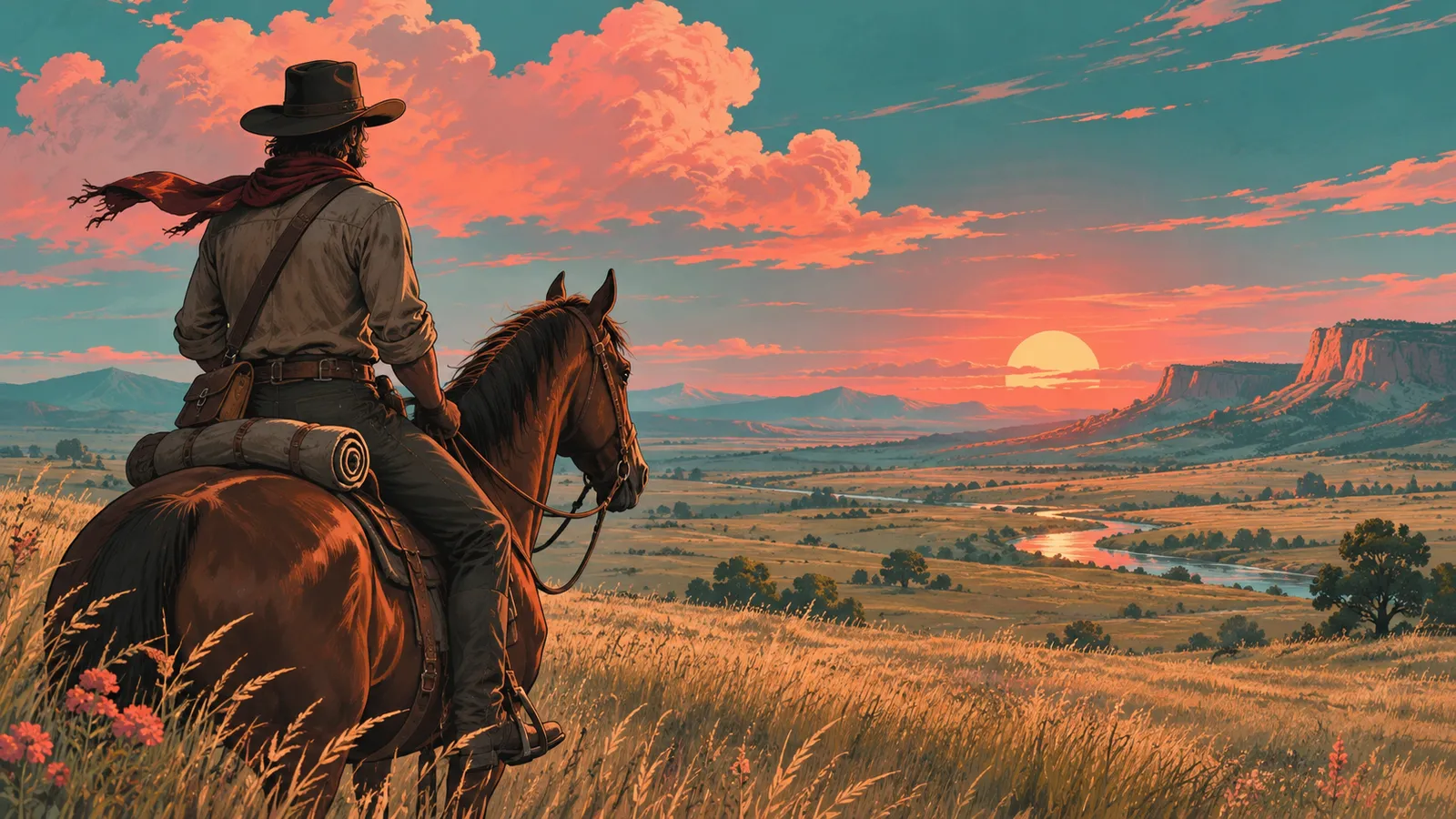
Rockstar’s official RDR2 description places Arthur Morgan and the Van der Linde gang in America in 1899, after a robbery forces them to flee. GTA 6’s official premise centers Jason and Lucia within a criminal conspiracy across Leonida. Those are distinct starting points for stories about people trying to survive through crime.
The historical difference changes the objects, institutions, and public spaces through which the stories are presented. A frontier settlement and a modern coastal city communicate wealth, authority, and isolation differently. This does not mean one setting is inherently deeper. It means the same broad theme can appear through different details: a gang’s shared life in one case, a couple navigating contemporary Leonida in the other. The right choice depends partly on which world you want to inhabit, not only on the number of activities listed on a feature page.
A gang-centered story and a central partnership
Arthur’s official premise concerns loyalty to the gang that raised him and tension between that loyalty and his own ideals. GTA 6’s premise emphasizes Jason and Lucia relying on each other as their situation worsens. These descriptions establish different relationship structures before any detailed mission comparison is necessary.
A larger group can distribute emotional attention across many people, while a central pair can make the relationship between two protagonists especially prominent. That is a narrative distinction, not a claim that either game lacks supporting characters. For a spoiler-light decision, ask which structure appeals to you: a story framed around a gang’s survival or one framed around a criminal partnership. Avoid summaries that prove their argument by revealing late-game outcomes. The premise supplies enough information to discuss the difference without turning a buying guide into a collection of major spoilers.
Modern technology changes the texture of everyday life

A contemporary setting gives GTA 6 access to phones, social feeds, modern traffic, and the public language of online life. These are not merely cosmetic substitutes for frontier objects. They can change how information reaches the player and how the world presents itself. A message or post can connect distant people without requiring them to share the same physical space.
Our phone and social media guide explains the reported features and their limits. In this comparison, the important point is thematic: contemporary communication can make a place feel crowded with voices even when the protagonist is alone. A historical setting communicates distance and connection through different means. Neither approach automatically produces better writing. They offer different opportunities for humor, intimacy, misunderstanding, and discovery. Judge the result through the scenes and interactions that matter to you rather than assuming newer technology always means a more meaningful system.
Travel affects the rhythm of exploration
The image of a rider crossing open country and the image of a car moving through a coastal city suggest different rhythms. Roads, traffic, intersections, and waterways organize a modern setting differently from trails and frontier settlements. Those environmental differences help explain why two Rockstar worlds can feel distinct even when both invite detours away from the main story.
This is not a measured claim about map size or travel speed. A large map can feel compact if destinations are easy to reach, while a smaller one can feel expansive when routes require attention. For a useful comparison, describe a journey and what happens during it. Does the route encourage looking at scenery, reading the road, noticing a public space, or stopping at an unexpected encounter? Distance alone cannot answer those questions. A square-kilometer headline is a weak substitute for explaining the actual experience of moving through the world.
Wildlife provides continuity without identical rules

Game Informer’s original GTA 6 wildlife feature describes Rockstar building on its earlier Red Dead work. That is a direct basis for discussing continuity in the studio’s animal presentation. It does not establish that every hunting, fishing, collection, or crafting rule has been transferred unchanged.
The useful comparison separates presentation from interaction. Fur, feathers, and animal variety concern how wildlife is represented. Tracking, rewards, equipment, and completion entries concern what the player does. A game can advance the first category while designing the second around a different setting and purpose. Our hunting and fishing guide explains the newer reporting, including why a fish-selling route should not be assumed from an older game. Compare the actual activity rules rather than treating a shared developer as a guarantee of mechanical identity.
Weather can shape atmosphere in different settings
Rain over a modern boulevard emphasizes reflective surfaces, traffic lights, and distant buildings. Mist over a landscape emphasizes depth, silhouettes, and the spaces between landmarks. These are visual observations about how weather interacts with a setting. They do not require a claim that one game has objectively superior storms.
GTA 6’s newer Weather Channel presentation gives the weather discussion a more concrete foundation, as explained in our weather guide. For a fair comparison, distinguish the range of shown conditions from measured mechanical effects. A dramatic cloudscape does not prove a vehicle-handling model, and a beautiful screenshot does not measure frame pacing. If your interest is photography and atmosphere, compare similar compositions. If your interest is simulation, look for tests that explain what changed under controlled conditions. Those are different questions and deserve different kinds of evidence.
Crime belongs to different social worlds
Both premises involve people committing crimes while facing pressure, but the surrounding society changes the meaning of those actions. A frontier gang and modern protagonists in a state-spanning conspiracy operate within different visual and institutional contexts. That difference supports different kinds of satire and tension even when both stories include robbery and pursuit.
For players, it is more useful to ask how a crime sequence is framed than simply whether both games have one. Is the scene about a relationship, a group’s survival, a public spectacle, or an immediate objective? Those questions can be explored without ranking every mission. Our Fleeca guide demonstrates the evidence boundary for a GTA 6 robbery scene: the image establishes a recognizable situation, while the complete mission structure requires more. Apply the same discipline when comparing activities across games rather than assuming matching labels mean matching designs.
Detail is valuable when it serves the experience
“More detail” is an appealing phrase, but it can describe very different things. It might mean more objects in a room, more possible interactions, more character reactions, or more steps required to complete an action. Those forms of detail do not all improve the experience in the same way for every player.
Some players enjoy deliberate routines that make a world feel tangible. Others prefer systems that stay unobtrusive while they follow the story or explore. A useful comparison should identify the kind of detail being discussed and explain its effect. Saying that one game has more animations is less helpful than explaining whether those animations create character, communicate a rule, or slow a repeated task. This is a preference-sensitive judgment. It should not be disguised as an objective score obtained by counting small objects in promotional footage.
Avoid treating “RDR2 in a modern city” as a full explanation
The phrase is convenient shorthand, but it can hide the very differences that make GTA 6 worth examining. A modern city introduces public spaces, transport, communication, and cultural references that require their own design decisions. Borrowing an approach to world detail does not make every interaction a renamed frontier mechanic.
The same caution works in the other direction. RDR2 should not be reduced to a slower version of Grand Theft Auto with horses. Its historical frame and central relationships have their own purpose. A strong comparison describes what an interaction contributes in each game. It can acknowledge continuity in Rockstar’s craft without flattening both projects into a single checklist. If a review uses the shorthand, look for the explanation that follows. The phrase should introduce a comparison, not replace the evidence needed to support one.
Graphics comparisons need matched conditions
A fair visual comparison should identify the platform, game version, output settings, capture method, and scene. A compressed video from one platform and a high-resolution promotional image from another are not equivalent evidence. Even the same location can look very different under different lighting and weather.
For still images, compare texture, composition, material appearance, and image clarity without claiming sustained performance. For video, consider motion, frame pacing, and how the capture was produced. This article does not provide benchmark numbers because no controlled test was performed. That limitation is more useful than assigning a winner from unmatched media. If you are deciding whether to upgrade hardware, use measurements for the hardware you actually own or plan to buy. An artistic preference for a sunset or forest does not establish the performance benefit of a console upgrade.
Story mode and online modes must stay separate
A comparison of the main stories should not quietly borrow activities, economies, or features from an online mode. Rockstar’s RDR2 store page distinguishes Story Mode and Red Dead Online as separate offerings. That is an important organizational fact for anyone reading feature lists or deciding which edition to purchase.
The same editorial rule should apply to GTA coverage: identify the mode a claim concerns. A property feature, vehicle service, or social activity from GTA Online should not become a GTA 6 Story Mode feature through association. A good comparison names the relevant game and mode before describing the system. This prevents a large but misleading checklist in which one title receives credit for years of separate online additions while the other is judged only on its story campaign. Compare like with like, or explain clearly why the categories differ.
Which game better suits your interests?
If you are drawn to a frontier setting, the official RDR2 premise provides a clear reason to begin there. If a contemporary coastal state and a central criminal partnership interest you more, GTA 6’s premise is the more direct fit. Those are editorial recommendations based on setting and structure, not promises about which story you will personally prefer.
If you enjoy wildlife, atmosphere, and unhurried exploration, look beyond a simple activity count. Read the specific guides for the interactions you care about. If you mainly want modern vehicles and urban spaces, focus on how those places are used rather than assuming a larger garage list guarantees enjoyment. You do not need to turn the choice into a permanent ranking. Two games can reward different moods and interests. Choosing the one you most want to spend time in is more useful than following a universal winner declared before the comparison has defined its criteria.
Price, platform, and time are practical factors
Before purchasing, check the current official listing for your platform and region. Availability, editions, and prices can change, and a historical launch price is not a current recommendation. This article deliberately avoids a price comparison that would become stale quickly or imply that a US storefront price applies everywhere.
Also consider what kind of session you want. A long story game is a substantial time commitment even when you play casually. Watch a spoiler-light presentation of the setting and controls if you are unsure, and choose based on the activities you actually enjoy. Do not buy an edition for an assumed mechanic that the included-content list does not establish. Our gear guides address controllers and storage separately so that a discussion of the games’ artistic differences does not quietly become an unnecessary hardware shopping list.
Frequently asked questions
Is GTA 6 simply RDR2 with cars? That shorthand overlooks differences in setting, relationships, communication, and public space. Does GTA 6 use identical wildlife rules? A reported development connection does not establish identical mechanics. Does this article declare a technical winner? No controlled benchmark was performed. Are map-size claims compared? No unsupported measurements are used.
Which should I play first? Choose the setting and story structure that most interests you, then check the current platform listing. Does the comparison reveal major story outcomes? It stays with public premises and broad design analysis. The strongest comparison respects both games as distinct works. RDR2’s frontier frame and GTA 6’s contemporary Leonida offer different ways to explore crime, loyalty, aspiration, and everyday life. Understanding those differences is more useful than a verdict that treats every player’s priorities as identical.